
Manchester Peptides catalogue profile
GHK-Cu
A naturally occurring copper-binding tripeptide researched in skin, extracellular-matrix and wound-repair biology. Studies explore collagen, elastin, tissue remodelling and hair-follicle pathways, with evidence varying by formulation and use.
Available catalogue formats
Choose the listed format
Prices shown are the current catalogue guide prices.Vial · 100 mg
GHK-Cu
Product information
A naturally occurring copper-binding tripeptide researched in skin, extracellular-matrix and wound-repair biology. Studies explore collagen, elastin, tissue remodelling and hair-follicle pathways, with evidence varying by formulation and use.
Evidence and sources at a glance
- Human evidence
- Some topical and cosmetic studies exist, but formulation quality, scale and endpoints vary.
- Regulatory context
- Cosmetic ingredient use is not evidence that injectable GHK-Cu is an approved treatment.
- Cu-GHK fibroblast study ↗Primary in-vitro study of fibroblast activity and collagen production; formulation and experimental conditions matter.
- GHK topical evidence review ↗Recent peer-reviewed review indexed by PubMed.
Pen · 100 mg
GHK-Cu
Product information
A naturally occurring copper-binding tripeptide researched in skin, extracellular-matrix and wound-repair biology. Studies explore collagen, elastin, tissue remodelling and hair-follicle pathways, with evidence varying by formulation and use.
Evidence and sources at a glance
- Human evidence
- Some topical and cosmetic studies exist, but formulation quality, scale and endpoints vary.
- Regulatory context
- Cosmetic ingredient use is not evidence that injectable GHK-Cu is an approved treatment.
- Cu-GHK fibroblast study ↗Primary in-vitro study of fibroblast activity and collagen production; formulation and experimental conditions matter.
- GHK topical evidence review ↗Recent peer-reviewed review indexed by PubMed.
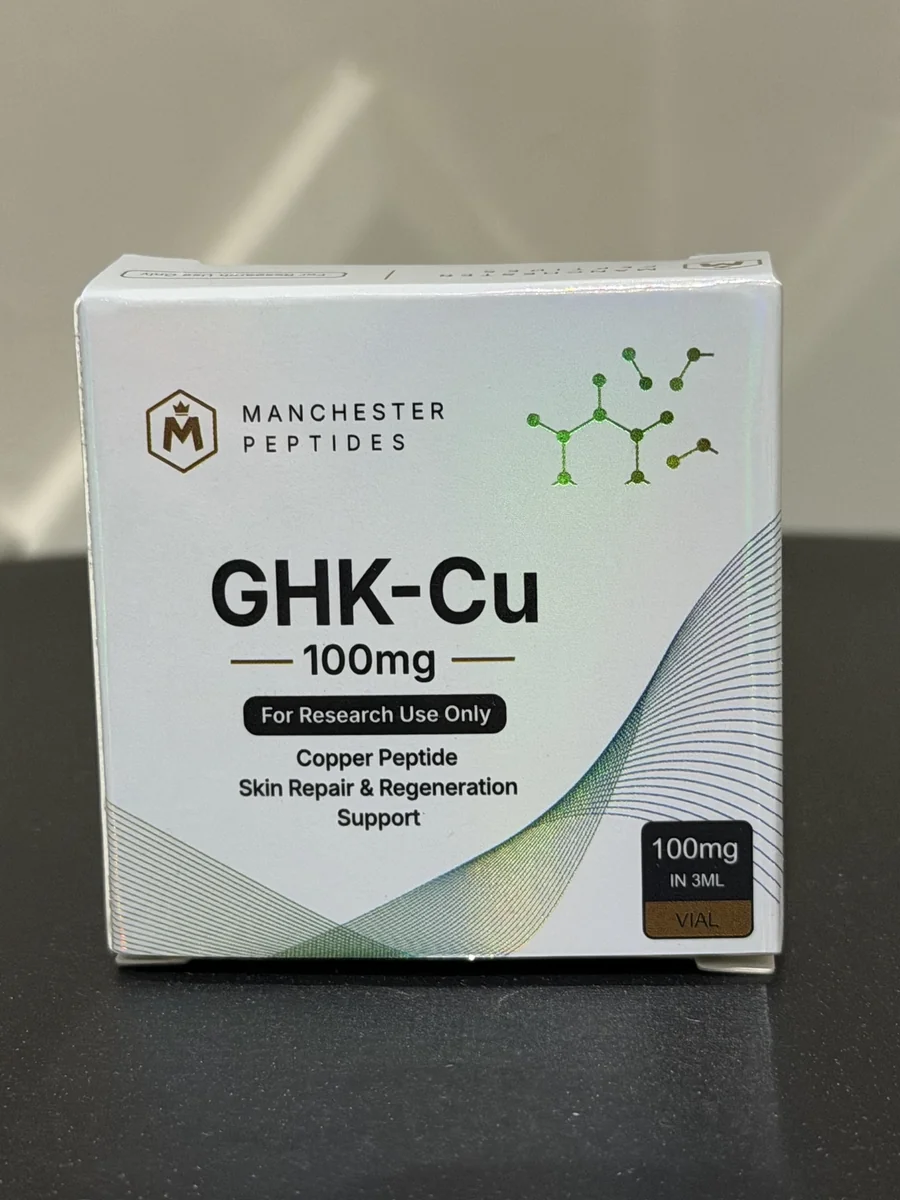
View supplied reference photograph
Plain-English identity
What is GHK-Cu?
Research explores skin appearance, wound models, collagen synthesis, extracellular-matrix organisation, inflammation and hair-follicle biology.
There is substantial laboratory and cosmetic interest, but clinical evidence varies by formulation and use. Evidence for topical formulations cannot automatically be transferred to injectable or uncharacterised research material.
Evidence and sources at a glance
- Human evidence
- Some topical and cosmetic studies exist, but formulation quality, scale and endpoints vary.
- Regulatory context
- Cosmetic ingredient use is not evidence that injectable GHK-Cu is an approved treatment.
- Cu-GHK fibroblast study ↗Primary in-vitro study of fibroblast activity and collagen production; formulation and experimental conditions matter.
- GHK topical evidence review ↗Recent peer-reviewed review indexed by PubMed.
Third-party documentation
Certificates of Analysis
Reference reports concern the named submitted samples. A catalogue batch match has not been established; check the strength and source on each report.Evidence-led research guide
Go deeper into GHK-Cu
A naturally occurring copper-binding tripeptide researched in skin, extracellular-matrix and wound-repair biology.
Last reviewed 10 October 2026. Research and reference information only. This page does not provide dosing instructions, treatment recommendations or medical advice. Not for human or veterinary consumption.